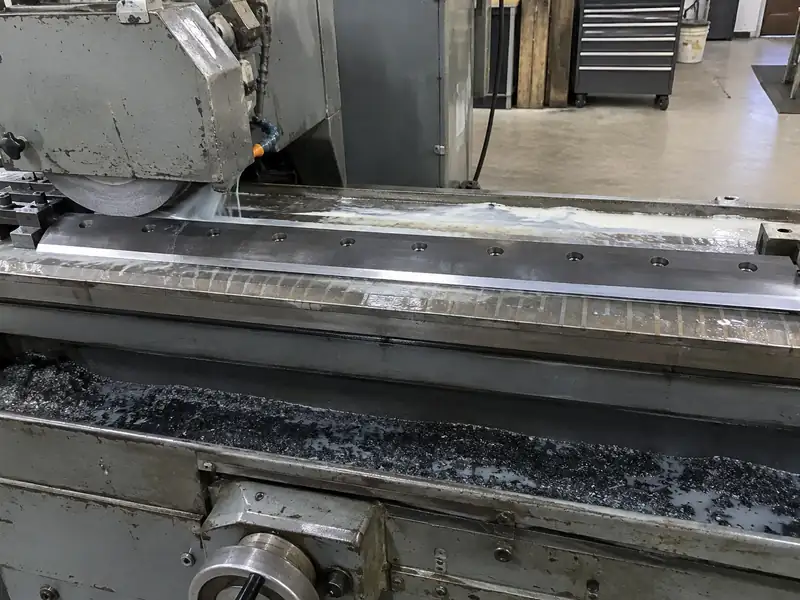
Shear blades ground straight and sharp.
Industrial shear blades surface-ground back to a straight, sharp edge at the correct bevel. Blades are checked for cracks, chips and straightness first, ground in matched sets where they work as a pair, and sent back protected and ready to install.
- Guillotine and swing-beam shear blades
- Ground as matched upper and lower sets
- Edge angle and clearance noted on the job
- Chipped edges assessed before grinding
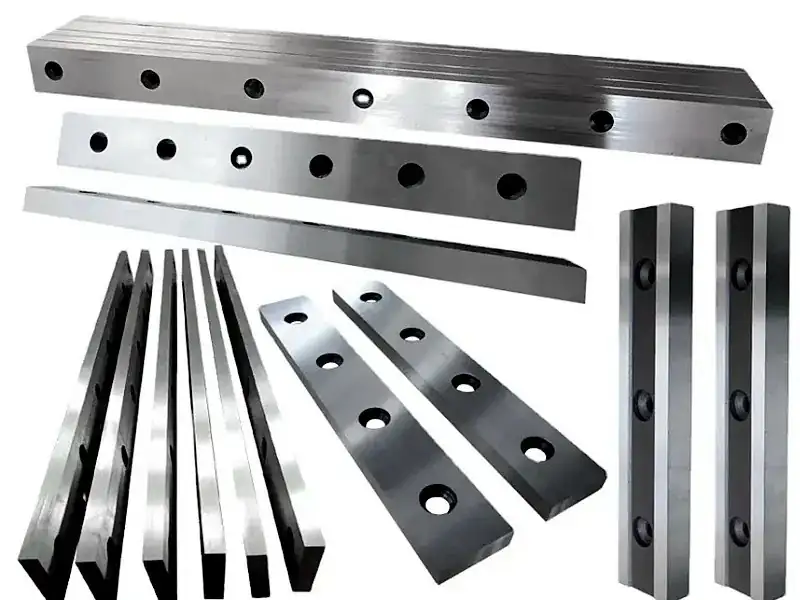
Inspected, checked straight, then ground.
Only enough steel comes off to get past the wear and the chips, so the blade lasts more regrinds.
Inspect
Blades are cleaned and checked for cracks, chipped edges, bent sections and mounting-hole damage. A blade that shouldn’t be reground is reported before work starts.
Check straightness
Straightness is checked along the full length. A bent blade throws off the clearance and the cut, however sharp the edge is.
Grind
The edge is surface-ground to the original bevel, taking off only the steel needed to get past wear and chipping.
Finish and protect
Edges are deburred and inspected, then oiled and wrapped so the edge isn’t damaged before it goes back in the machine.
Long blades, ground full length, in sets.
- Hydraulic guillotine shear blades, upper and lower
- Swing-beam and mechanical shear blades
- Long blades ground in full length, in matched sets
- Replacement blades made or sourced when a blade is cracked or at minimum height: ask when you request the quote
Setting the machine after sharpening
- Reset blade clearance for the thickness you cut: the most common cause of a poor cut after sharpening
- Check hold-down pressure and blade seating along the full length
- Test on scrap of production thickness before going back to the job
- Write down the grind date and blade height, so the next regrind is planned, not overdue
Signs blades are due for sharpening.
Dull blades show up on the parts first, then in the machine.
- 01Burrs on cut edgesA rolled or heavy burr means the edge is rounded and the clearance has opened up.
- 02Ragged or angled cutsMaterial twists or the edge isn’t square: edge wear, or uneven wear along the blade.
- 03A double break lineA second shear line on the cut edge is the classic dull-blade sign.
- 04More noise and loadThe machine works harder and louder to make the same cut.
- 05Edge chippingSmall chips leave matching marks on every cut until they’re ground out.
- 06Parts need deburring by handWhen finishing work shows up downstream, the blades are usually overdue.
Not sure what it is? Try the troubleshooter or tell David what the shear is doing.
Before you send the blades.
Should I send both blades?
How much material does sharpening remove?
What information helps the quote?
Same shop, same teardown first.
Tell us what’s down.
It goes straight to David. Nameplate photos go by text, one tap after you send.
- 1David reads itYour request lands with him right away, with the equipment and urgency you picked.
- 2Send a nameplate photoAfter you send, one tap opens a text to (346) 429-7753 for the photos.
- 3Bring it in, get a straight quoteIt’s torn down and inspected, and you get the price and timing before any work starts.
Line down? Pick “Down now”. Equipment that is down gets priority.
The shop: 6922 La Paseo St, Houston, TX 77087.